
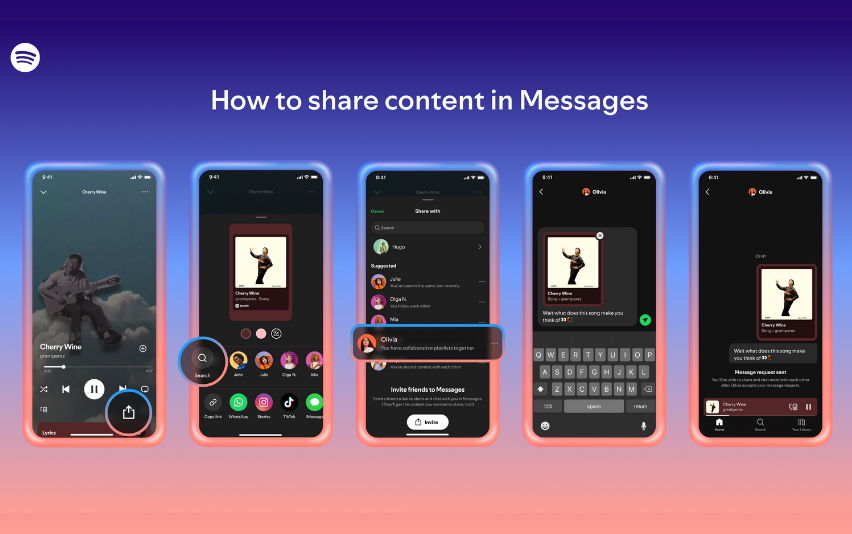
Spotify is taking another step toward becoming a more social platform by testing Spotify in-app group chats. The new feature aims to encourage real-time interaction among users, allowing them to chat, react, and engage around shared music interests without leaving the app.
As competition in music streaming intensifies, Spotify is increasingly investing in community-driven features that go beyond passive listening.
What Are Spotify’s In-App Group Chats?
The new feature allows users to create or join group chats directly within Spotify. These chats are designed to center around:
- Shared playlists
- Artists or albums
- Listening sessions
- Music discovery discussions
With Spotify group chat feature, users can talk about tracks as they listen, share recommendations, and build deeper connections through music.
Why Spotify Is Adding Group Chats
Spotify’s decision reflects broader trends in social and audio platforms:
Turning Listening Into a Social Experience
Music is inherently social. social features on Spotify help users connect emotionally through shared tastes.
Increasing User Engagement
In-app conversations keep users active longer, reducing the need to switch between apps.
Competing With Social-First Platforms
As platforms blend media and messaging, Spotify is positioning itself beyond just streaming.
How the Group Chat Feature Works (So Far)
While still in testing, early reports suggest that:
- Group chats are integrated into the Spotify app
- Users can message around specific playlists or listening moments
- The experience is lightweight, focused on music—not full-scale messaging
Spotify is expected to refine the feature based on user feedback before a wider rollout.
What This Means for Users
For everyday listeners, Spotify social engagement tools could:
- Make playlist sharing more interactive
- Encourage discovery through conversation
- Strengthen friend-to-friend connections
For users who already share music links externally, this feature brings the conversation back inside Spotify.
Impact on Artists, Creators, and Brands
Group chats could eventually open new opportunities for:
- Artist fan communities
- Playlist curators building audiences
- Brands running music-based campaigns
By fostering discussion around music, Spotify can create richer ecosystems for creators and marketers alike.
How This Fits Spotify’s Broader Strategy
Spotify has steadily introduced social elements such as:
- Collaborative playlists
- Friend activity feeds
- Shared listening sessions
The addition of in-app messaging on Spotify aligns with this strategy, reinforcing Spotify’s goal of becoming a community-driven audio platform.
Why This Update Matters for Guest-Posting & SEO Websites
This feature update is ideal for traffic-focused sites because:
- Music + social features have consistent search demand
- Keywords are long-tail and low competition
- Brands and SaaS platforms often seek backlinks from neutral tech coverage
Covering updates like this helps build authority in entertainment tech and social media trends.
Frequently Asked Questions (FAQ)
1. What are Spotify in-app group chats?
They are chat features that allow Spotify users to communicate and discuss music directly within the app.
2. Is Spotify rolling out group chats globally?
The feature is currently in testing, and availability may expand based on user feedback.
3. Can users chat while listening to music?
Yes, group chats are designed to support conversations around playlists and listening experiences.
4. Does this turn Spotify into a messaging app?
No. The chats are music-focused and not intended to replace full messaging platforms.
5. Will artists be able to use group chats?
Spotify may explore creator and artist use cases in future updates.
Spotify testing in-app group chats highlights the platform’s shift toward deeper social interaction. By enabling users to talk about music where they listen, Spotify is strengthening emotional engagement and community building.
For users, it adds conversation to listening. For creators and brands, it opens new engagement channels. And for publishers, it’s a high-value, crawlable topic with long-term traffic potential.