
Search engine optimization has been the foundation of online visibility for more than two decades. Businesses have invested heavily in keyword research, backlinks, technical optimization, and content creation to improve their rankings on search engines. However, the rapid rise of AI-powered search experiences is changing the rules.
As users increasingly rely on AI assistants and generative search engines for answers, a new discipline is emerging: Generative Engine Optimization (GEO).
Generative Engine Optimization focuses on helping brands, websites, and content creators become visible within AI-generated responses rather than solely competing for traditional search rankings. As AI continues to reshape how information is discovered online, GEO is becoming an essential strategy for businesses that want to remain relevant and competitive.
What Is Generative Engine Optimization (GEO)?
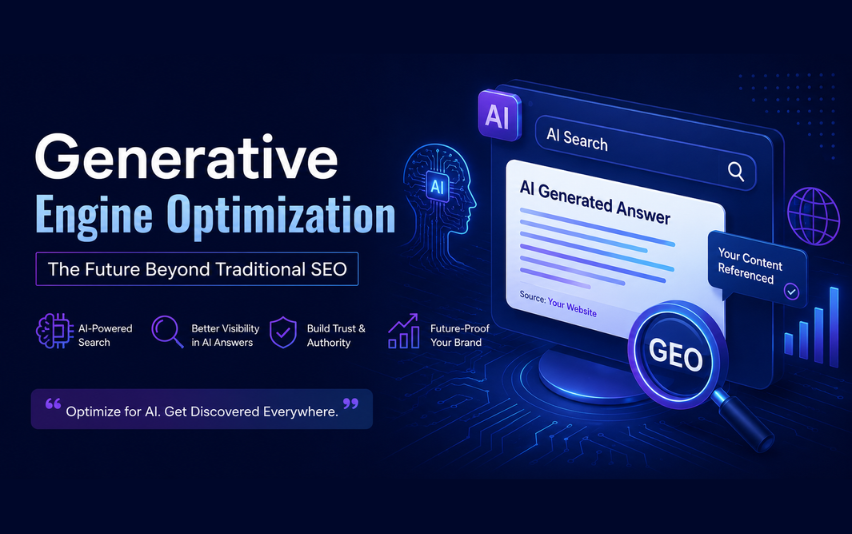
Generative Engine Optimization (GEO) is the practice of optimizing content so that AI-powered search engines and large language models can understand, reference, and cite it when generating answers.
Traditional SEO aims to improve rankings on search engine results pages (SERPs). GEO, on the other hand, focuses on increasing the likelihood that your content becomes part of the information used to generate AI responses.
Instead of simply asking, “How can I rank first on Google?” marketers are beginning to ask:
- How can AI systems find my content?
- How can AI trust my content?
- How can my brand appear in AI-generated answers?
These questions form the foundation of GEO.
Why GEO Matters More Than Ever
The way people search for information is evolving.
Rather than scrolling through multiple search results, users can now receive direct answers from AI-powered platforms. These systems summarize information from multiple sources, reducing the need for users to visit several websites.
For businesses, this creates both a challenge and an opportunity.
If your content is not recognized by AI systems, your visibility may decline even if your website ranks well in traditional search results. Conversely, if your content is frequently referenced by AI-generated responses, your brand can gain significant exposure and authority.
As AI search adoption grows, GEO is becoming an important complement to traditional SEO rather than a replacement.
GEO vs Traditional SEO
Traditional SEO Focuses On:
- Keyword optimization
- Search rankings
- Backlink acquisition
- Technical website performance
- User experience metrics
- Search engine indexing
GEO Focuses On:
- Content clarity and accuracy
- Entity recognition
- Topical authority
- Structured information
- Trustworthiness and credibility
- AI-friendly content organization
While SEO helps search engines rank pages, GEO helps AI systems understand and reference information.
The most successful digital strategies in the coming years will combine both approaches.
Key Factors That Influence GEO
1. Build Strong Topical Authority
AI systems prefer content from sources that demonstrate deep expertise within a subject area.
Instead of publishing random articles across multiple topics, businesses should focus on creating comprehensive content clusters around their core areas of expertise.
For example, a digital marketing website should cover:
- SEO
- Content marketing
- AI marketing
- Link building
- Conversion optimization
This helps establish authority and improves the chances of being referenced by AI systems.
2. Create Factually Accurate Content
Generative AI models prioritize information that appears reliable and well-supported.
To improve GEO performance:
- Use credible sources
- Include relevant statistics
- Update outdated information
- Avoid exaggerated claims
- Provide clear explanations
Accuracy builds trust, which is increasingly important in AI-driven search environments.
3. Use Clear Content Structure
AI systems process structured content more effectively.
Best practices include:
- Descriptive headings
- Short paragraphs
- Bullet points
- Numbered lists
- Frequently asked questions
- Clear definitions
Well-organized content makes it easier for AI systems to extract meaningful information.
4. Strengthen Brand Mentions Across the Web
AI systems evaluate information from multiple sources.
When your brand is consistently mentioned across industry websites, publications, forums, and professional communities, it becomes easier for AI systems to recognize your authority.
This is one reason why guest posting, digital PR, and thought leadership remain valuable strategies.
How Businesses Can Prepare for the GEO Era
The transition toward AI-powered search is already underway. Businesses that adapt early will be better positioned to maintain visibility as search behavior evolves.
Some practical steps include:
- Publish Original Research
- Answer Specific Questions
- Improve Content Depth
- Maintain Content Freshness
- Invest in Thought Leadership
Expert opinions, case studies, and industry insights can strengthen authority and improve recognition across the web.
The Future of Search Is Hybrid
The future is unlikely to be a choice between SEO and GEO.
Instead, businesses will need a hybrid strategy that addresses both traditional search engines and AI-powered discovery platforms.
Search engines will continue to play a major role in helping users find information. At the same time, generative AI systems will increasingly serve as intermediaries that summarize, recommend, and interpret content.
Brands that create authoritative, trustworthy, and well-structured content will be positioned to succeed in both environments.
Conclusion
Generative Engine Optimization (GEO) represents one of the most important developments in digital marketing today. As AI-powered search experiences become more common, businesses must thinkbeyond rankings and focus on becoming trusted sources of information.
The core principles remain familiar: expertise, accuracy, authority, and value. However, the goal is evolving from simply ranking in search results to becoming part of the answers users receive.
Organizations that embrace GEO now will be better prepared for the next generation of search, while those that rely solely on traditional SEO may find it increasingly difficult to maintain visibility in an AI-driven digital landscape.
Frequently Asked Questions (FAQ)
How is GEO different from traditional SEO?
Traditional SEO focuses on improving rankings in search engine results pages, while GEO focuses on increasing the likelihood that AI systems will cite, summarize, or reference your content in their responses.
Is GEO replacing SEO?
No. GEO is not replacing SEO. Instead, it complements traditional SEO. Businesses should combine both strategies to maximize visibility across search engines and AI-powered platforms.
Why is GEO important in 2026?
As more users rely on AI assistants and generative search experiences for information, businesses need to ensure their content can be discovered and referenced by these systems. GEO helps maintain visibility in this evolving search landscape.
Do backlinks still matter for GEO?
Yes. While GEO focuses heavily on authority and content quality, backlinks remain an important trust signal that can help establish credibility and improve overall visibility.