
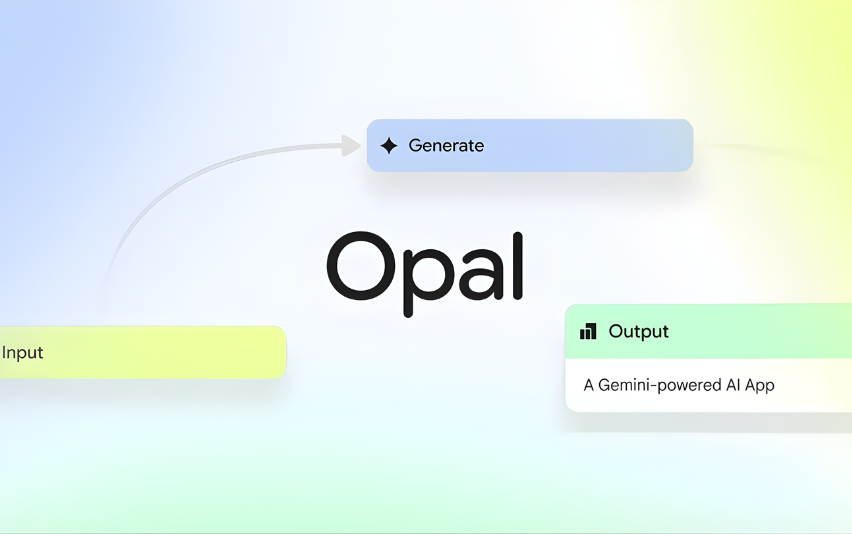
Artificial intelligence platforms are rapidly evolving from simple assistants into autonomous task execution systems. In its latest update, Google has enhanced its Opal platform with agent-driven workflow capabilities designed to automate multi-step processes across digital environments.
The update reflects a broader shift toward AI agents that can plan, execute, and coordinate tasks without constant human direction. As businesses increasingly adopt automation technologies, agent-based AI systems are becoming central to enterprise productivity and software orchestration.
The Rise of Agent-Driven AI Systems
Traditional AI tools respond to prompts, but agent-driven systems can independently manage sequences of actions. The evolution of Google Opal AI illustrates how AI platforms are moving toward autonomous workflow execution.
Agent-based AI enables:
- Task planning
- Multi-step automation
- Tool coordination
- Context awareness
- Process execution
This represents a major shift from reactive AI to proactive AI.
What Agent-Driven Workflows Mean
Agent workflows allow AI to break down goals into steps and execute them across software tools or data environments. Instead of manually triggering each action, users define objectives while AI manages execution.
The growth of AI workflow automation across enterprise platforms shows rising demand for intelligent process orchestration.
Typical workflow capabilities include:
- Task decomposition
- Sequential execution
- Data retrieval
- Tool interaction
- Result synthesis
AI becomes an operational system rather than just an interface.
How Opal’s Update Improves Automation
By adding agent-driven workflows, Opal can handle more complex tasks that require coordination across steps or services. This reduces manual intervention and improves efficiency.
The expansion of AI agents platform capabilities suggests Google is positioning Opal as an enterprise automation environment rather than a simple AI assistant.
Benefits may include:
- Automated task chains
- Reduced human oversight
- Faster execution
- Cross-tool integration
- Intelligent decision flows
Automation becomes scalable and adaptive.
Enterprise Impact of AI Workflow Agents
Businesses increasingly require automation systems that handle repetitive or multi-stage processes. Agent-based AI systems can manage workflows in areas such as:
- Data processing
- Content generation
- Research tasks
- Customer support
- Software operations
AI agents shift work from manual execution to autonomous orchestration.
Why AI Agents Are the Next Platform Shift
Technology trends suggest AI agents will become foundational to digital productivity. Instead of users interacting step-by-step with software, agents will coordinate tools behind the scenes.
Industry momentum includes:
- Autonomous assistants
- Workflow orchestration AI
- Multi-tool agents
- Task automation systems
- Intelligent process engines
Google’s Opal update aligns with this transformation.
Competitive Landscape in AI Automation
Major technology companies are racing to build agent-driven platforms capable of executing complex tasks. The integration of workflows into AI systems reflects competition to define the next computing paradigm.
Key strategic goals include:
- Enterprise adoption
- Automation leadership
- Platform ecosystems
- Productivity tools
- AI infrastructure dominance
Agent platforms may redefine software interaction.
Why This Update Matters
Agent-driven workflows represent a major step toward autonomous computing. By enabling AI to manage task sequences independently, platforms reduce friction between intent and execution.
Opal’s evolution signals a transition from AI assistants to AI operators — systems that not only generate information but act on it.
Automation is moving from suggestion to execution.
Frequently Asked Questions
What is Google Opal AI?
Google Opal AI is an artificial intelligence platform designed to support automation, task execution, and intelligent workflows across digital environments.
What are AI workflow automation systems?
AI workflow automation systems use artificial intelligence to plan and execute multi-step tasks without continuous human input.
What is an AI agents platform?
An AI agents platform enables autonomous AI systems to coordinate tools, data, and actions to achieve defined goals or workflows.
How do agent-driven workflows help businesses?
They automate complex processes, reduce manual effort, improve efficiency, and enable scalable task execution across operations.
Will AI agents replace manual workflows?
AI agents will increasingly automate repetitive and structured workflows, while humans focus on strategy and decision-making.
Google’s enhancement of Opal with agent-driven workflows marks a significant step toward autonomous AI systems capable of executing complex tasks independently. As enterprises seek scalable automation and intelligent orchestration, agent-based platforms are emerging as the next evolution of digital productivity tools.
The transition from prompt-based AI to workflow-driven AI signals a new computing paradigm — one where intent triggers action through intelligent agents rather than manual processes.
In the future of software, AI will not just assist work.
It will perform it.